Stradbroke Island
If you were to ask any diver either which places would be at the top of their bucket list or what were among the best places they’ve dived in, the answer to both of those questions would include the Galapagos Islands without fail. The top reason for Galapagos’ impeccable reputation is almost always the intense biodiversity that few places can match. This is among the many reasons that divers who visit the Galapagos often struggle to find subsequent destinations that come close to the experience of diving there. I say this because I am one of those divers guilty as charged, and for many years, I wondered whether any of the destinations I would travel to in the future would ever come close, if not surpass it.
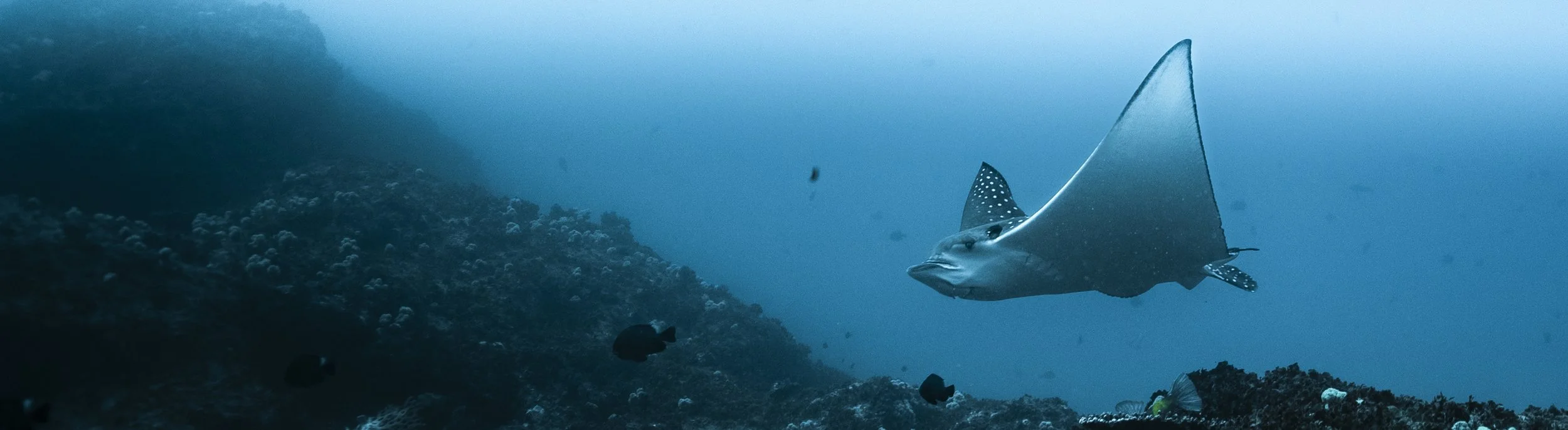
While researching the obvious contenders in the Pacific Ocean (i.e. Socorro, Malpelo, Cocos, French Polynesia, Palau), an unexpected contender got added to the list when I made friends with a fellow tech diver, Daniel Fitzgerald, who serves as the manager of the Manta Lodge & Scuba Centre on Stradbroke Island, in Queensland, Australia. Dan had already regaled me with stories of some marine life encounters he had experienced on the island, but it wasn’t until we caught up during a dive conference we were both speaking at where I finally realised he wasn’t exaggerating. While on stage, Dan presented footage from his GoPro that chronicled encounters with humpback whales, bull sharks, grey nurse sharks, leopard sharks, spinner sharks, shovel nose sharks, manta rays, cownose rays, eagle rays, marble rays, bowmouth guitarfish, turtles and too many species of fish to count - all in crystal clear blue water. Rarer visitors to the island also include hammerheads, great whites and whale sharks. The final cherry on top was how Dan described how the dive centre caters to rebreather divers as much as it does scuba divers. As soon as he concluded his presentation, I immediately knew that I had found another contender for Galapagos level-diving within my own country, and wasted no time hatching a plan to visit the island.
Most divers who visit Stradbroke Island are either residents from southeast Queensland who come for the weekend or tourists flying from other states and countries that come for no more than a few days. But I decided to go for nearly the whole month, which initially seemed like a highly impulsive, fiscally irresponsible move. However, there was a logic underpinning that decision in a few key ways.
Firstly, I decided to drive all the way up from Sydney in my own car rather than fly to Brisbane and rent a car for the whole month. Not only did this dodge the horrendous costs associated with flights, excess baggage fees and a rental car, but it also allowed me to pack as much as I wanted. Travelling with a rebreather and a camera is the ultimate recipe for travel woes because of both of them are individually complex pieces of electronic equipment that, when combined together, can snowball into a huge, expensive mountain of bags and suitcases. In contrast, driving up there meant I could bring not only the rebreather and the camera, but also a keg of sofnolime, two Al80 tanks with regulators and rigging attached, a steramine jug, backup scuba gear, flexitubs, and a toolbox - all without any luggage restrictions or fees whatsoever.
My second move was to work remotely during normal office hours on weekdays, not take any annual leave, and keep weekends strictly for diving. Although it would have been nice to dive everyday, the truth is that tech diving (let alone in Australian waters) can be very tiring, so having adequate rest between dives is crucial. Finally, I strategically chose a month that had the perfect combination of low numbers of tourists, high numbers of animals present, and a lack of in-person commitments for my day job, and August was the month that ticked the boxes, with a bonus it was during the middle of the humpback whale season.
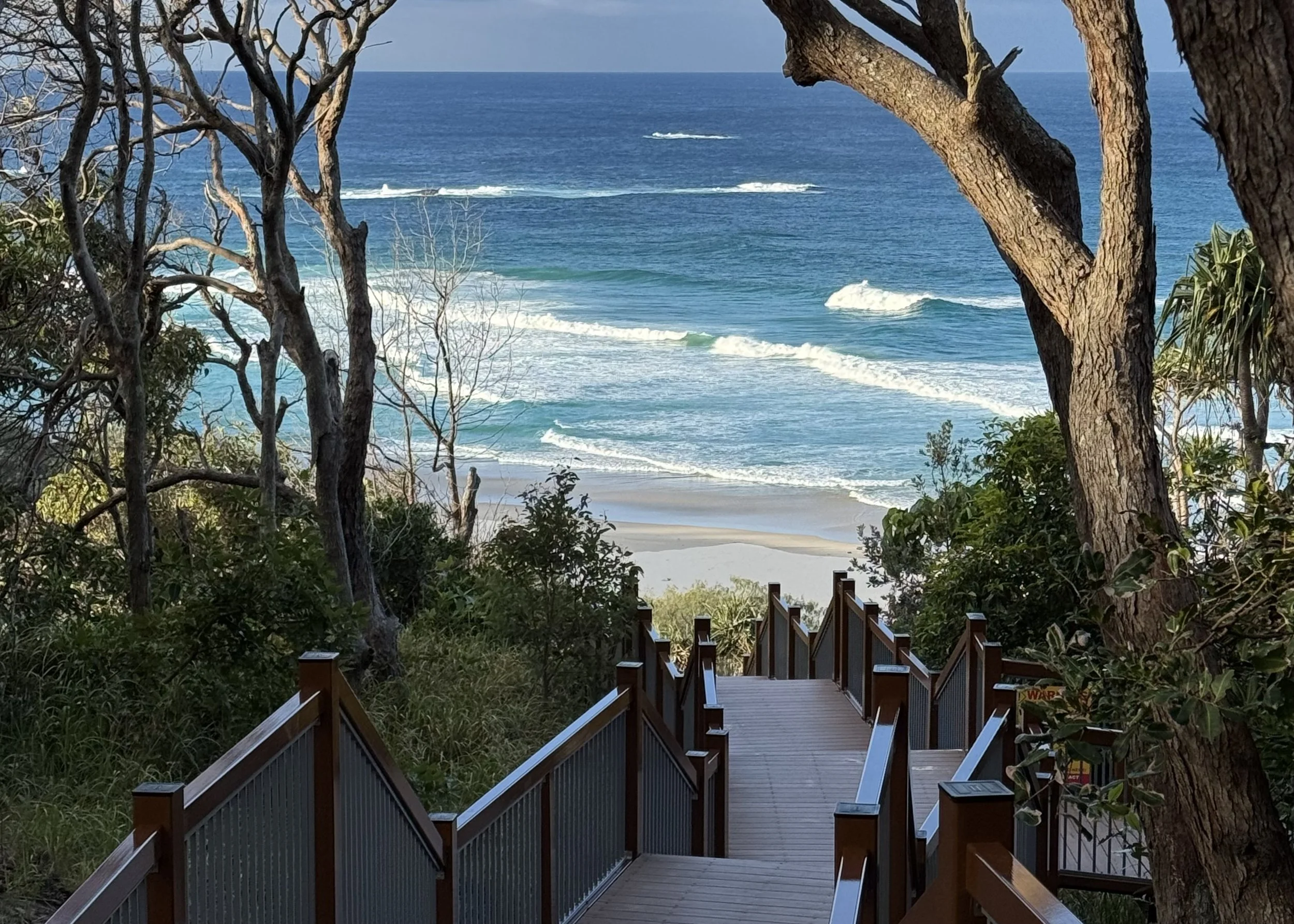
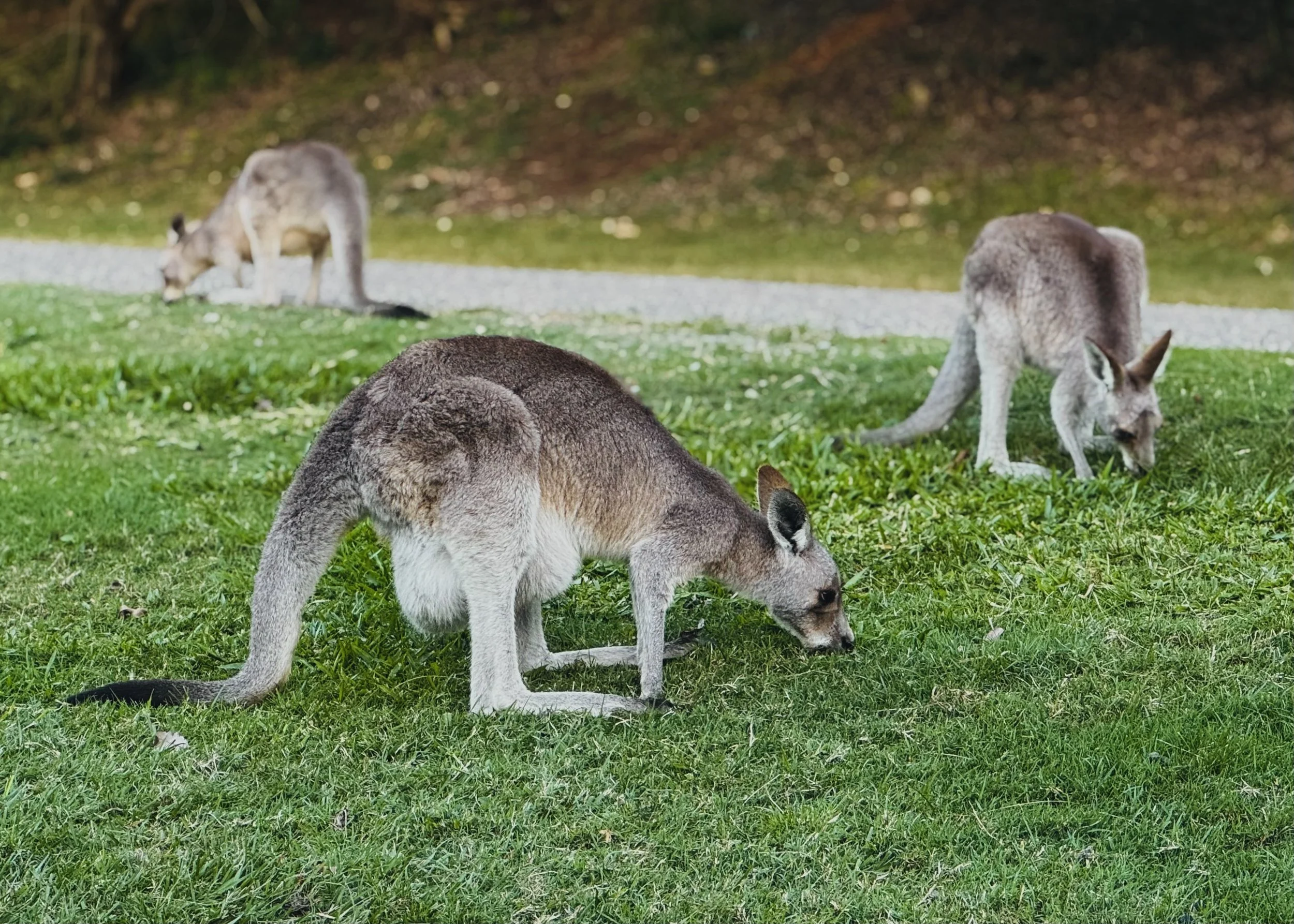
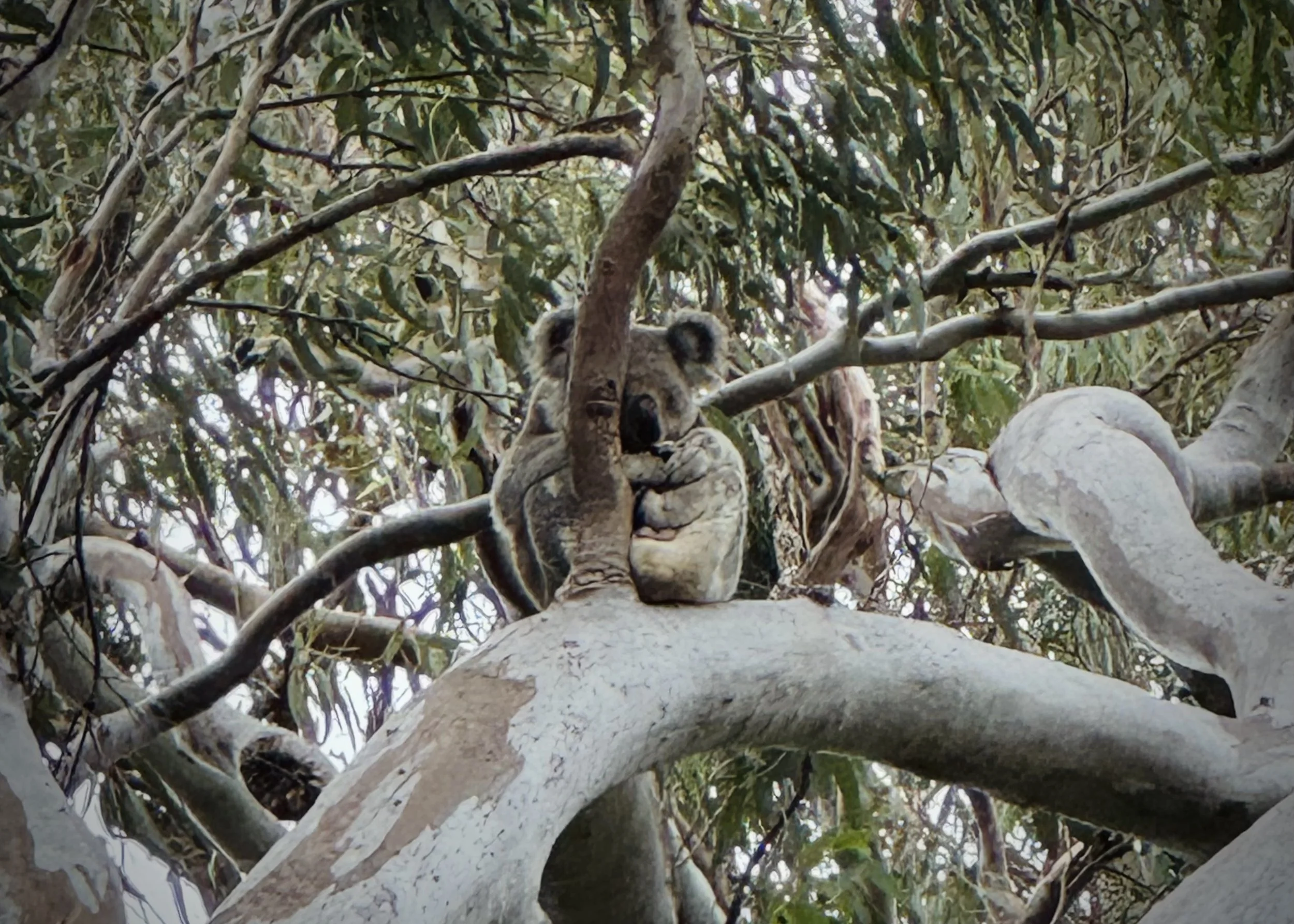
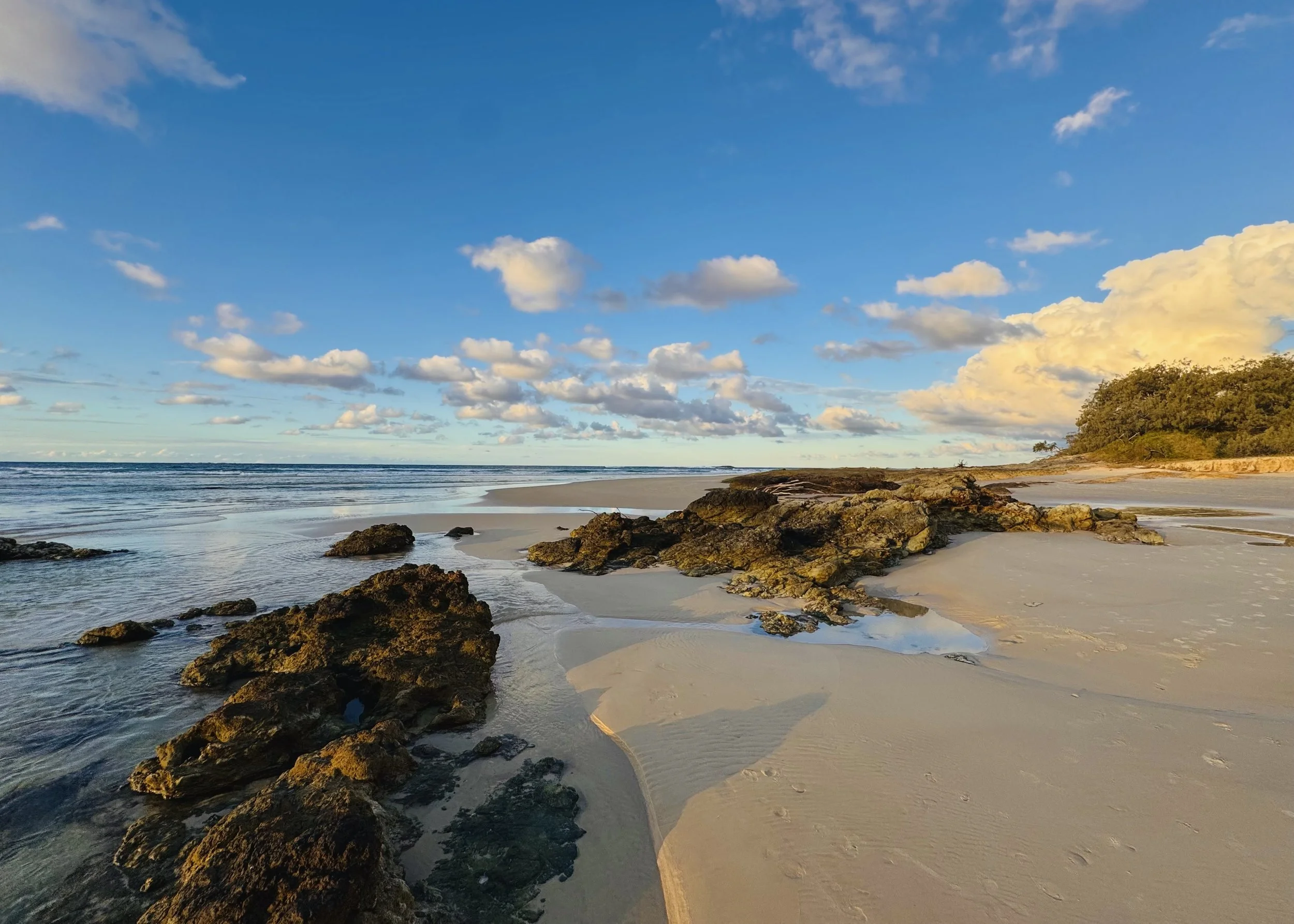
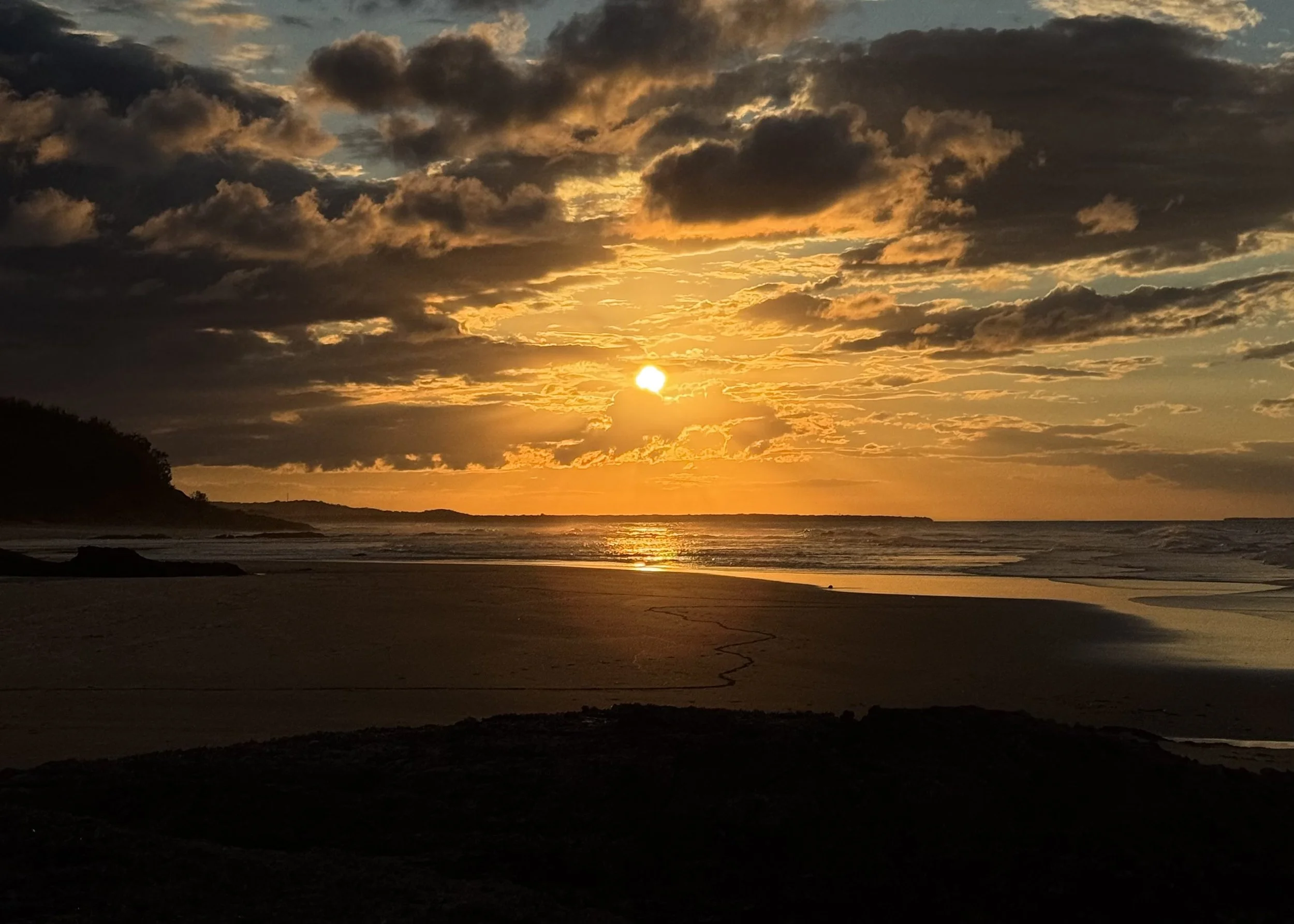
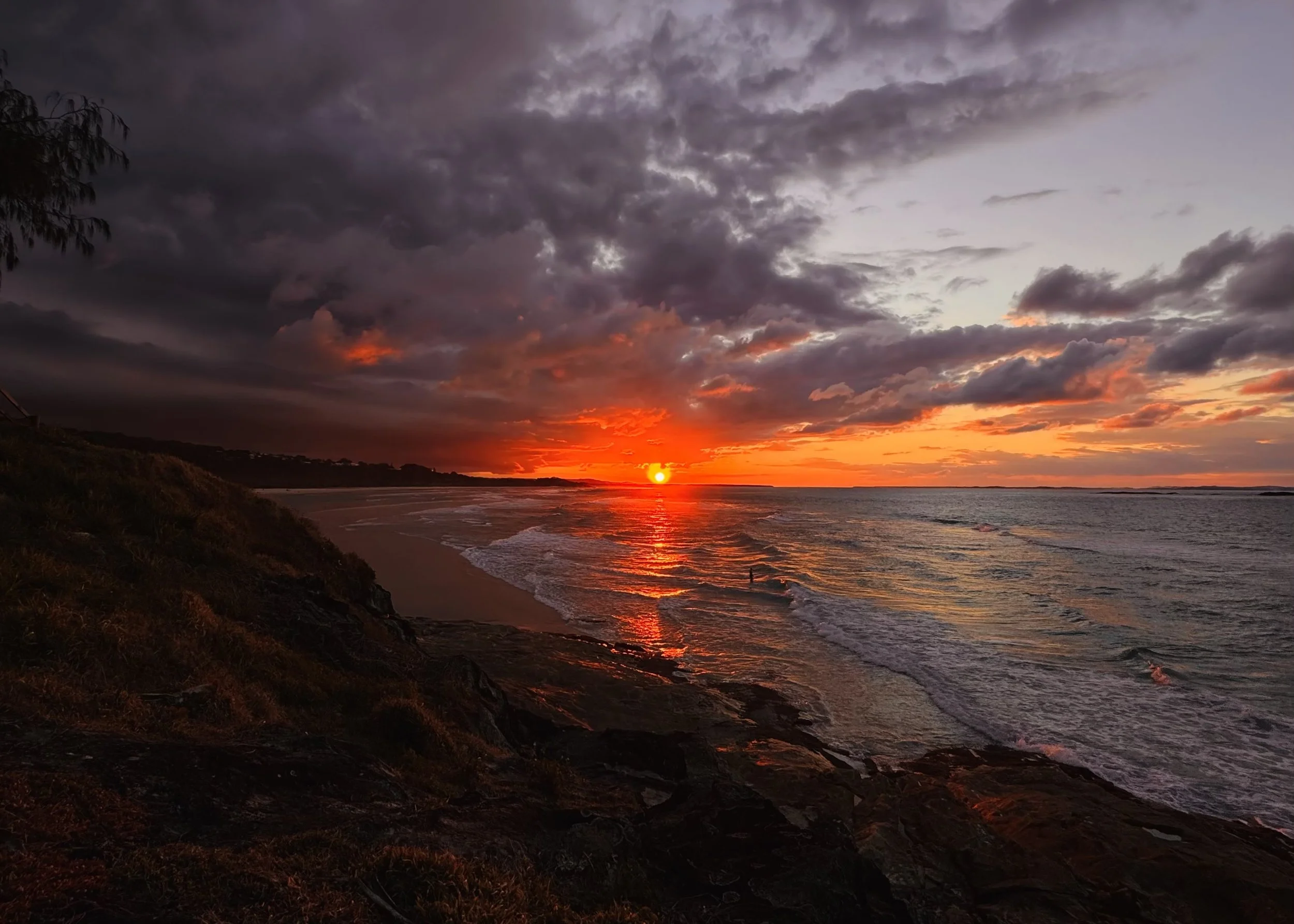
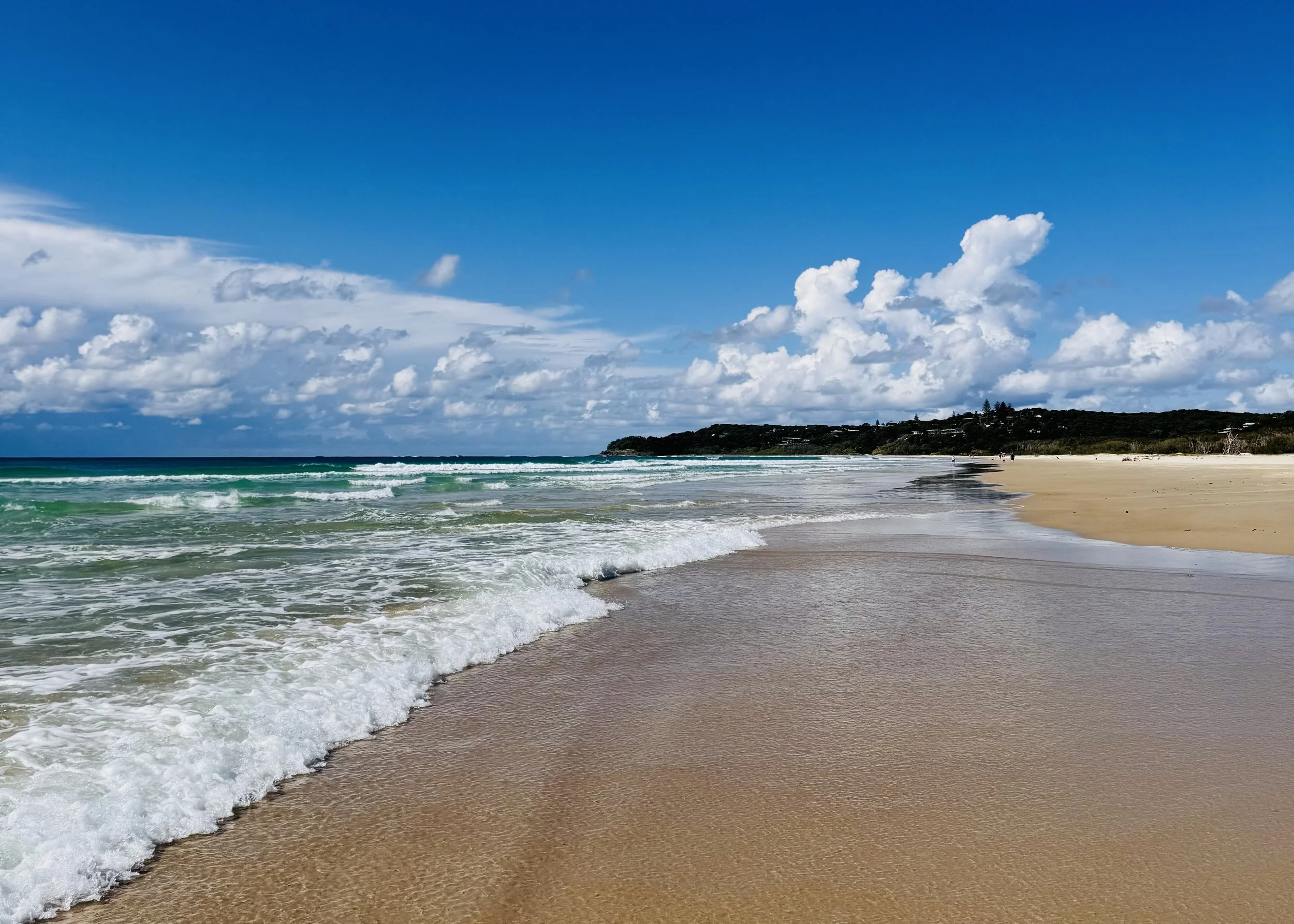
With everything all set, I packed my car and drove all the way up from Sydney. I stopped in the Gold Coast for the night before boarding a ferry from east Brisbane that allows visitors to commute to the island. As soon as I arrived at my house (big shoutout to Ray White Straddie for looking after me), I was immediately reminded how different island life is to city life. For starters, it is not uncommon to walk past kangaroos either grazing on the grass or hopping across the street, hearing the sounds of laughing kookaburras permeate the soundscape, and even occasionally spotting sleepy koalas lazily perched in the trees. In other words, you are connected to nature in a way that is harder to experience in urbanised cities. The island is also surrounded by dozens of gorgeous seascapes overlooking the Pacific Ocean, especially in Point Lookout. If you’re a beachcomber, you will not be disappointed by exquisite beaches like Frenchman’s, Deadman’s and Cylinder. There are also several whale watching platforms along the coastline to spot migratory humpback whales from afar on land. Although cafes and restaurants are few and far between, groceries are perfectly adequate here, though larger chains like Woolworths do occasionally ship groceries on demand via the main ferry.
After settling into my home for the month, I promptly drove to Manta Lodge. Whenever I travel for diving, I always like to get to know the staff at the dive shop the day before my first dive, and to also get a feel of where everything is so that I know my way around when things get busy. This is especially relevant if you’re a rebreather diver, given how the assembly and cleaning processes are more complex, and also because of how there are more failure points with the equipment. Fortunately, Manta Lodge is one of the best rebreather-friendly dive shops in the country, and not only did they have a whole tech room dedicated just for rebreathers, but their staff were all familiar with the technology to help me out with anything I asked for. Sure enough, during my orientation, I had a problem with the regulator for my bailout tank, and the resident technician, Luca, swiftly solved the problem within minutes.
Another thing that makes Manta such a fantastic operation is how all their staff members have the ideal combination of balancing laidback friendliness with detailed professionalism, experience and protocols. Not only does this result in a safe and fun experience for customers, but it allows them to cater to every level of experience amongst visiting divers. The lodge is also well known for its hostel above the dive shop, which is definitely one of the safest and cleanest hostels I’ve seen, and is a good budget-friendly option for visitors staying for only a few days.
On the day of my first dive, my excitement bubbled up as the minutes ticked. I wasn’t bothered by the fact I was the only rebreather-diving customer on the boat - I was just too eager to see how the diving would manifest. The briefing was led by James Griffith, the owner of the shop and the divemaster for the day, who brought a level of animated enthusiasm and playfulness that reminded me a lot of my guide from Galapagos.
After preparing all our gear, I was pleasantly surprised and amused by the adventurous process of how we got from the dive shop to the ocean. Manta Lodge is right near the most western part of Cylinder Beach, which is the access point to the dive sites. To get past the surf on the beach, RIB boats full of gear and divers are towed by tractors across the pristine sands of the beach, before they are reversed and launched into the surf. Once the RIB is deep enough, the engines fire up, and the boat powers away through the waves, en route to the dive site.
Getting buffeted by the surf and the windchill is definitely not pleasant if you are in a rented 5mm closed-cell wetsuit, but because I was in a drysuit with undergarments, I was fairly toasty the whole time. It only took us a few minutes to reach Flat Rock, a sea mount that is the most popular dive site on the island. Although a full boat can get quite crowded when divers are kitting up, the skipper and divemasters were all highly attentive, and ready to help me out as much as they were the other customers.
Sitting on the edge of the RIB, clad with nearly 80kgs of gear (JJ-CCR, bailout, camera, Jet fins, etc), I was slightly anxious, partly due to the swell that comes from the surge that builds up towards Flat Rock, and partly not knowing how warm or cold the water would be compared to the air temperature. But once I backrolled into the water, everything became clear, literally and figuratively. Not only was the visibility exceptional, but the 20C water was quite pleasant (so much so, I promptly removed the 5mm hood I was wearing), and the surge and current weren’t as bad underwater. Strangely, the first thought that popped into my head once I hit the water and swam towards the mooring line was, “Huh, this temp is just like Galapagos! What a pleasant surprise.” Little did I know that that was just the beginning of comparisons to come during the dive.
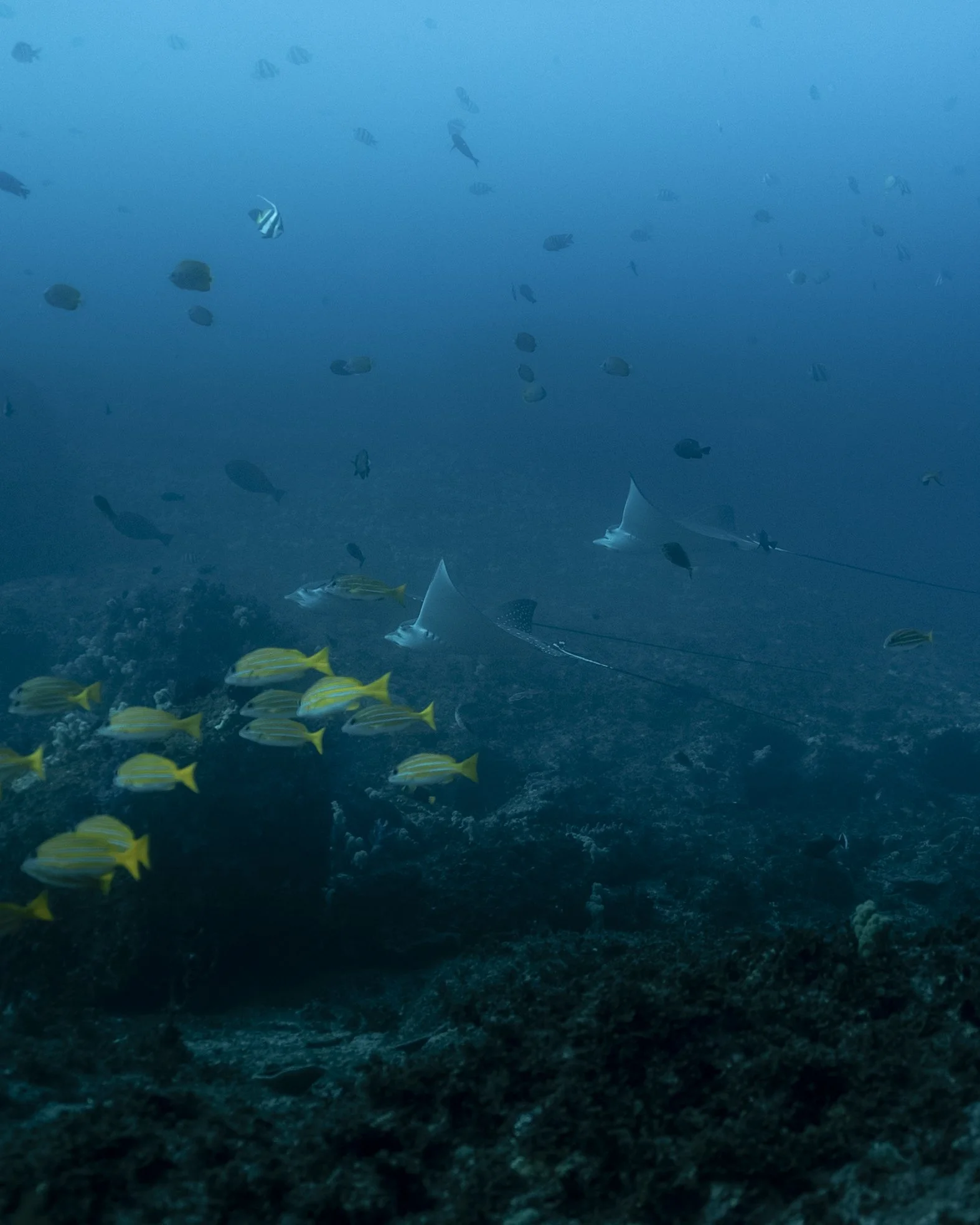
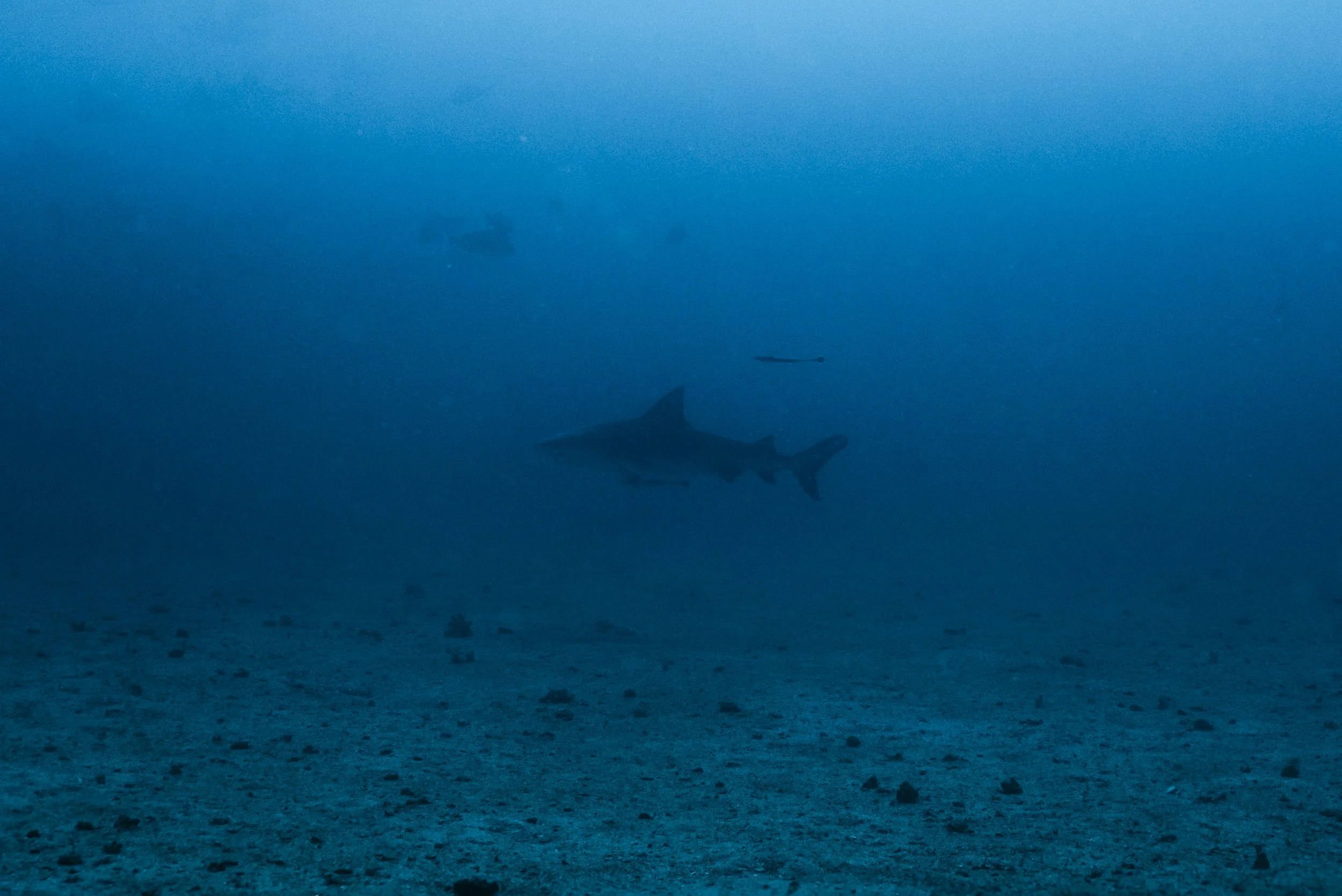
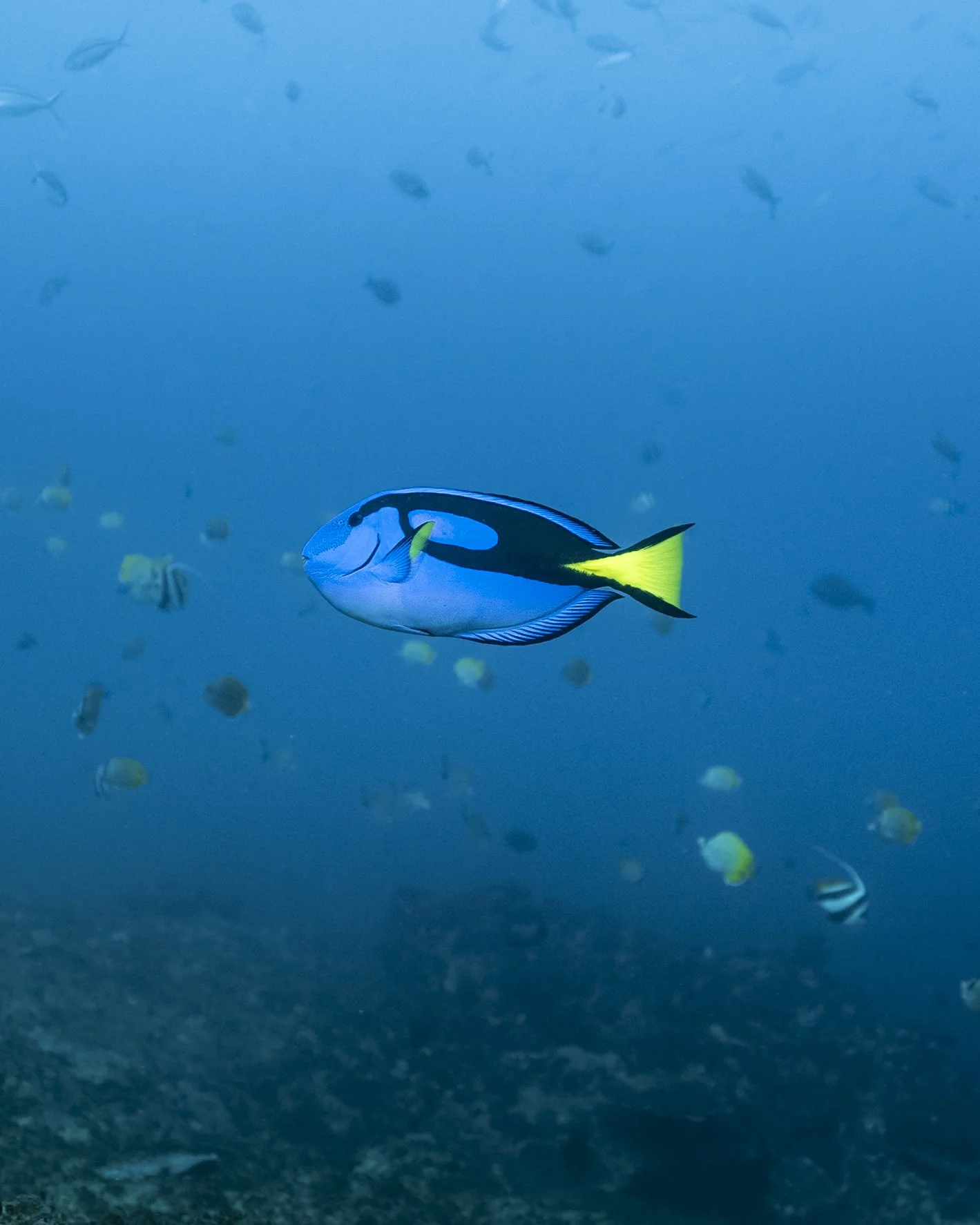
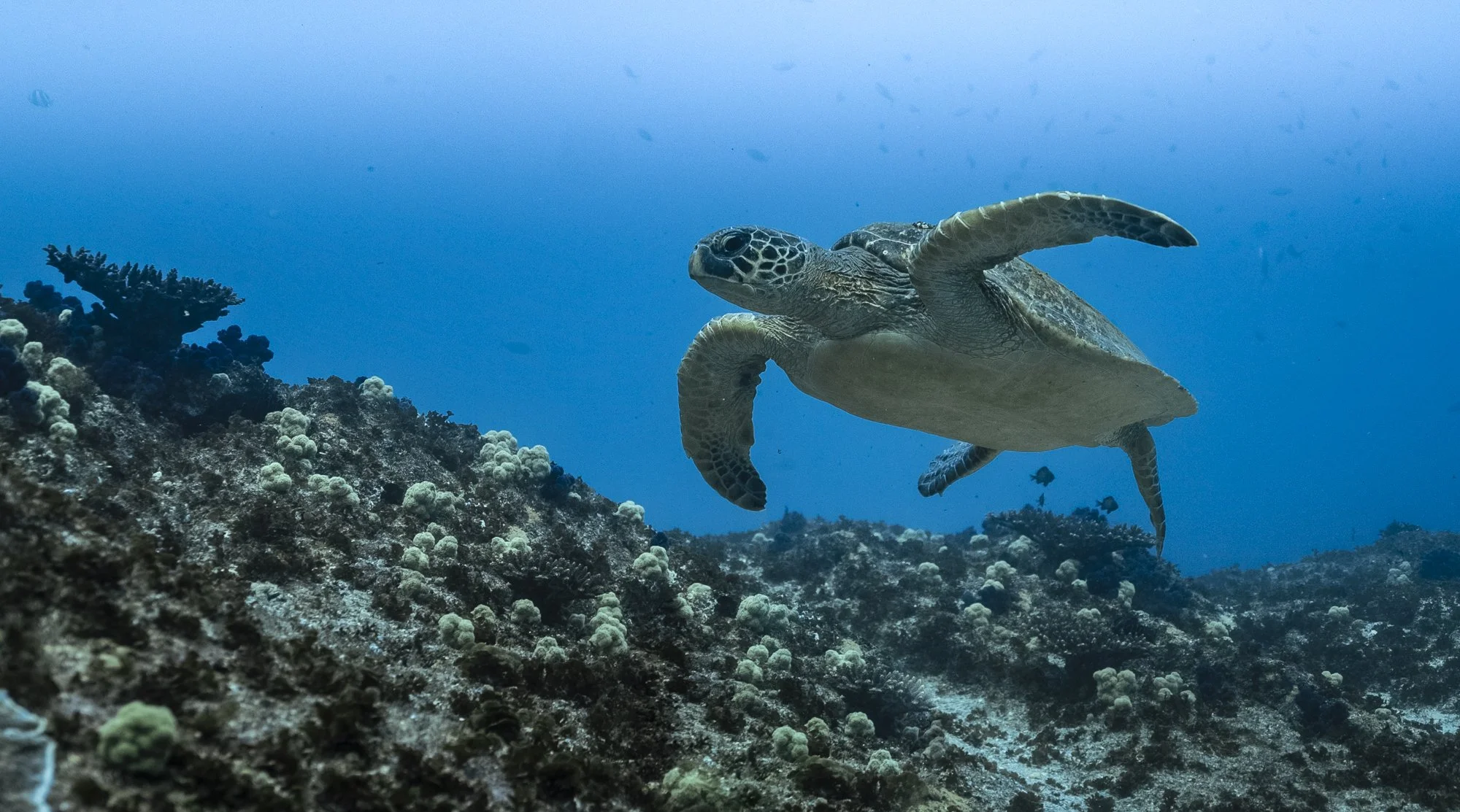
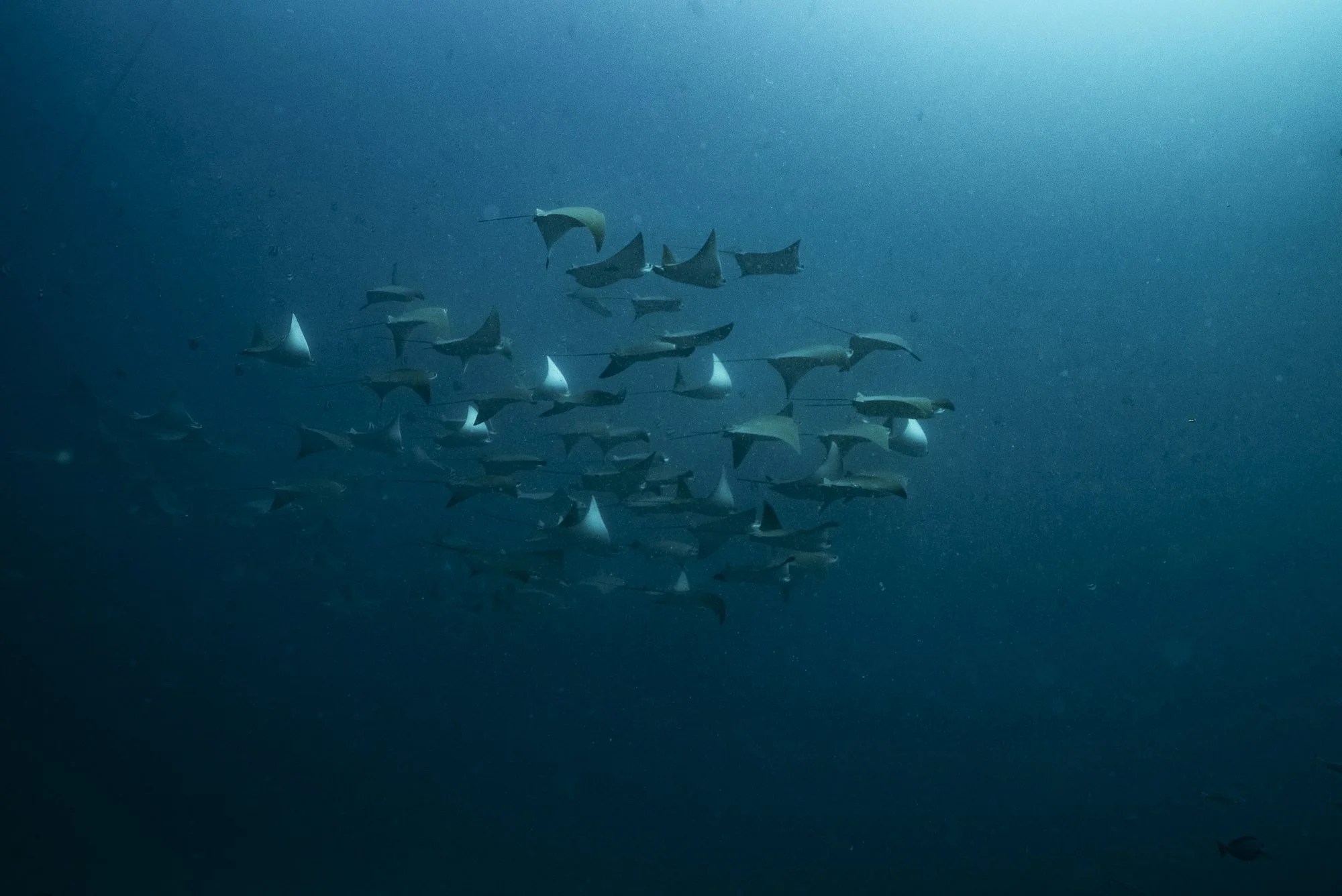
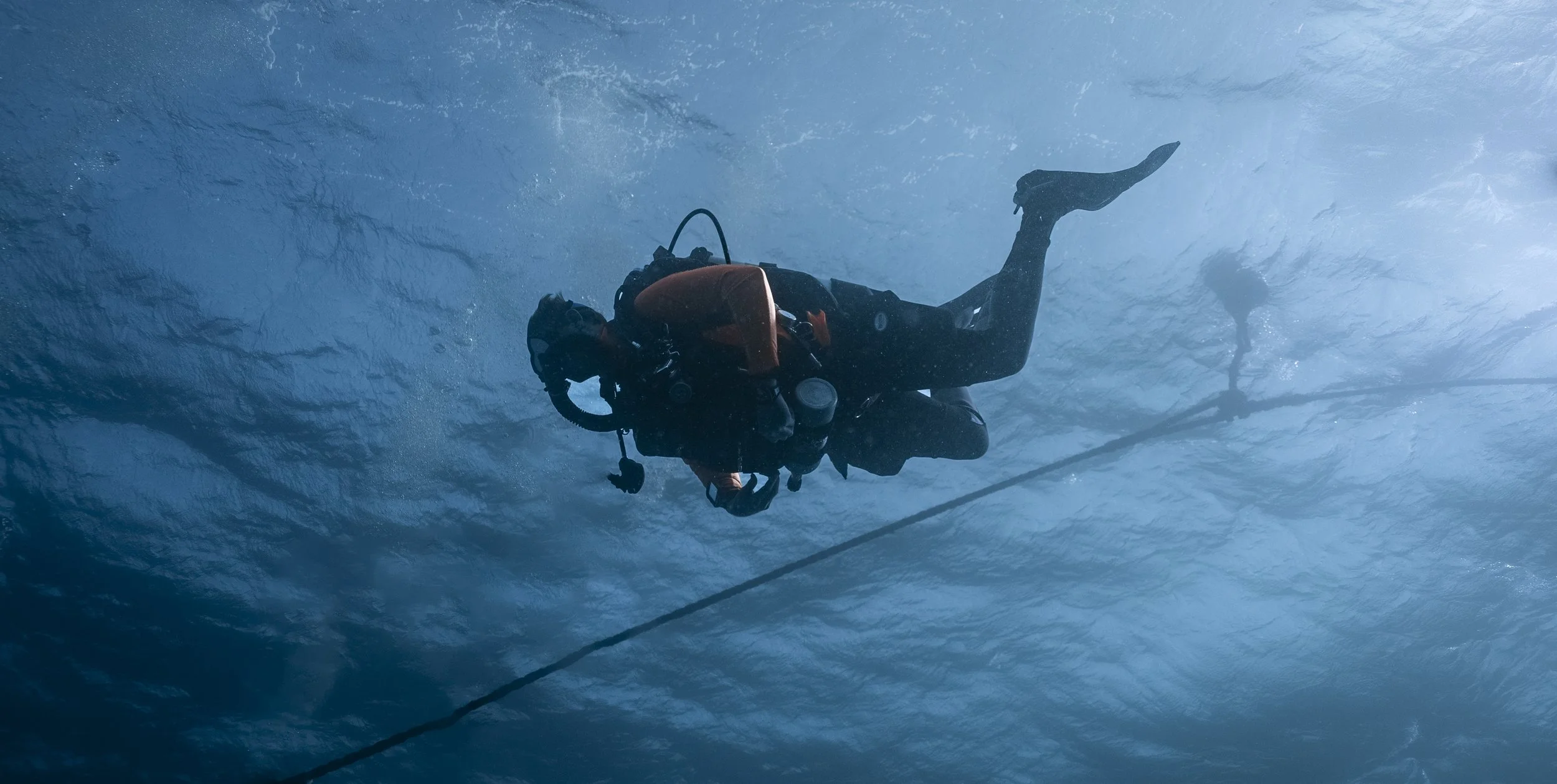
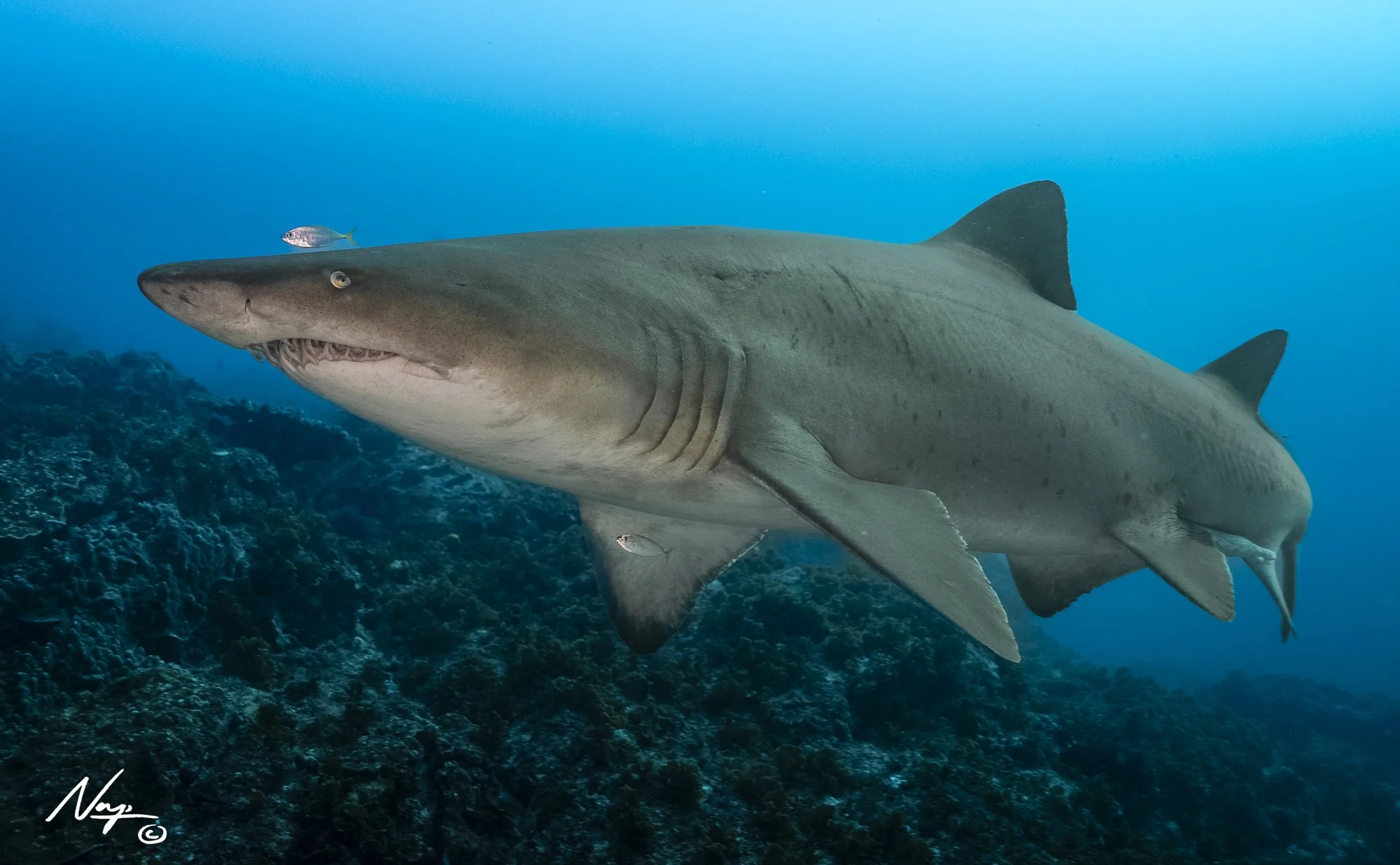
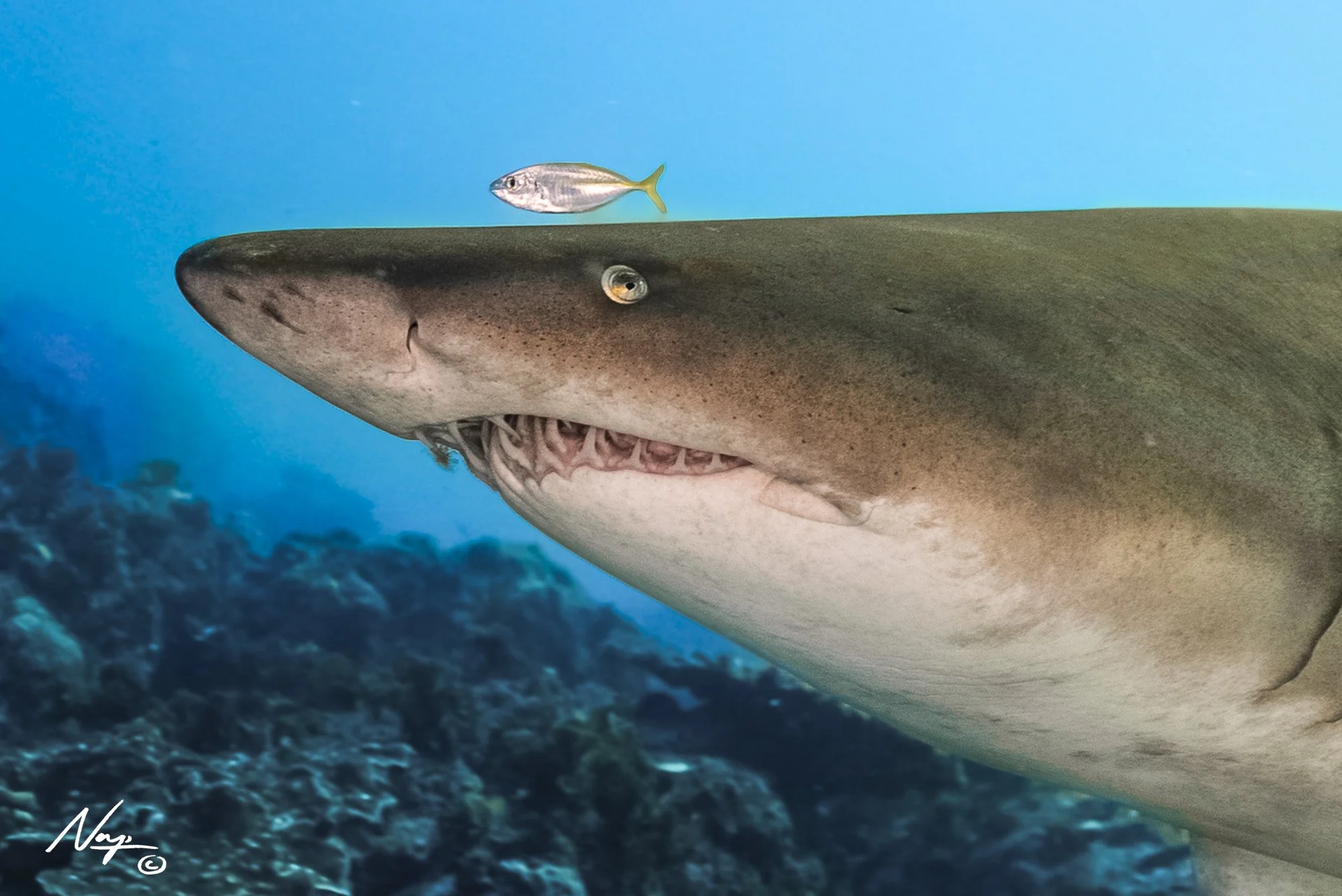
As soon as we descended to 20m, the action was intense - in fact, it was exhausting keeping up with all the animals surrounding me. Within five minutes, I saw eagle rays, striped snappers, a green sea turtle, fish schools, and a grey nurse shark. And this was before we even made it to the deepest part of the site, aptly named Roaring Deep. There, we planted ourselves on the white sandy floor at 33m deep, and waited for what would come. In the distance, we saw bull sharks swimming through their usual routes, but showing no signs of aggression whatsoever. Having formally studied shark biology nearly a decade ago, I had read that bull sharks tend to be really well-behaved in crystal clear water where they can easily distinguish humans from their prey, and I was very pleased to see my predictions about their non-aggressive behaviour were correct, especially since we were observing them from afar.
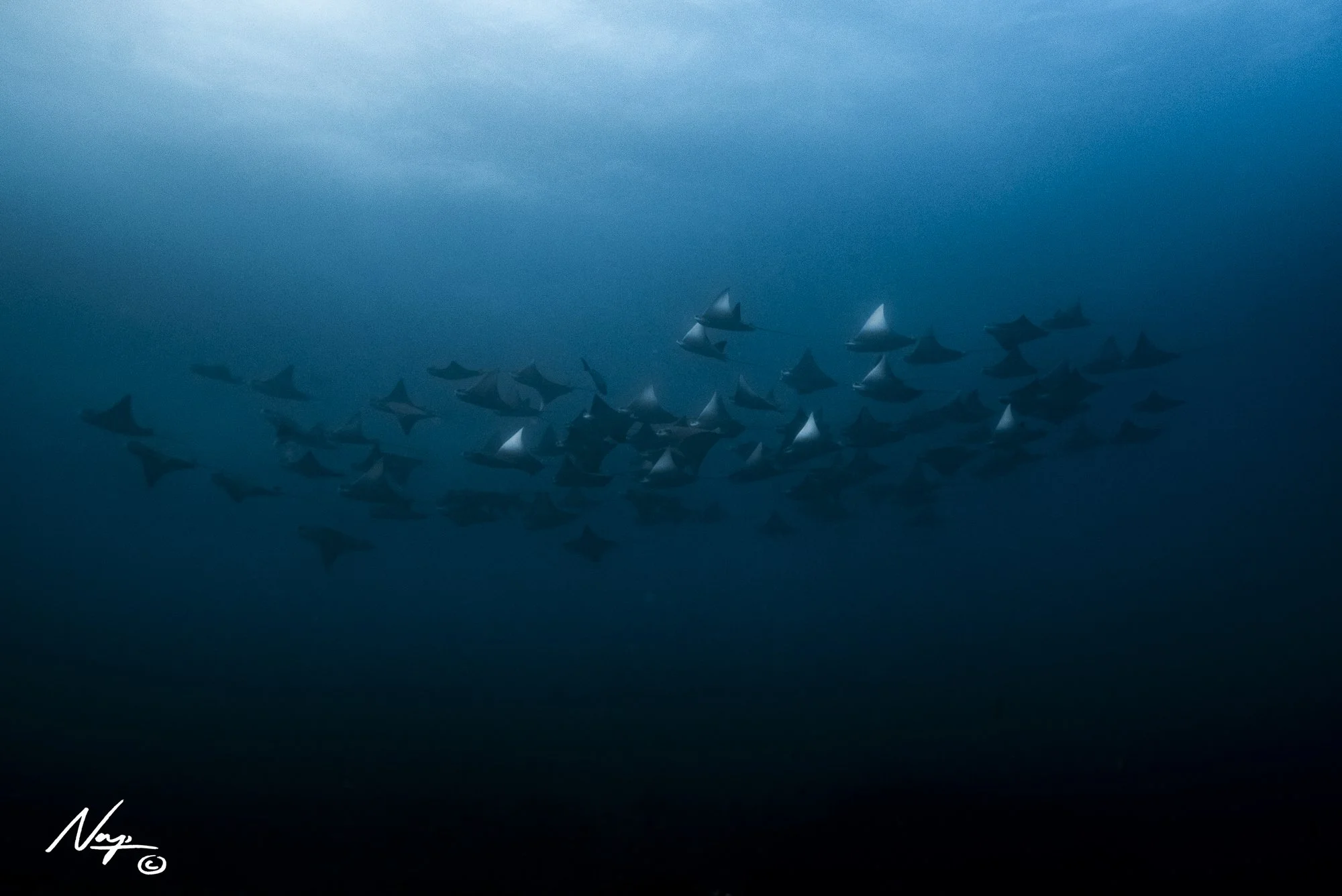
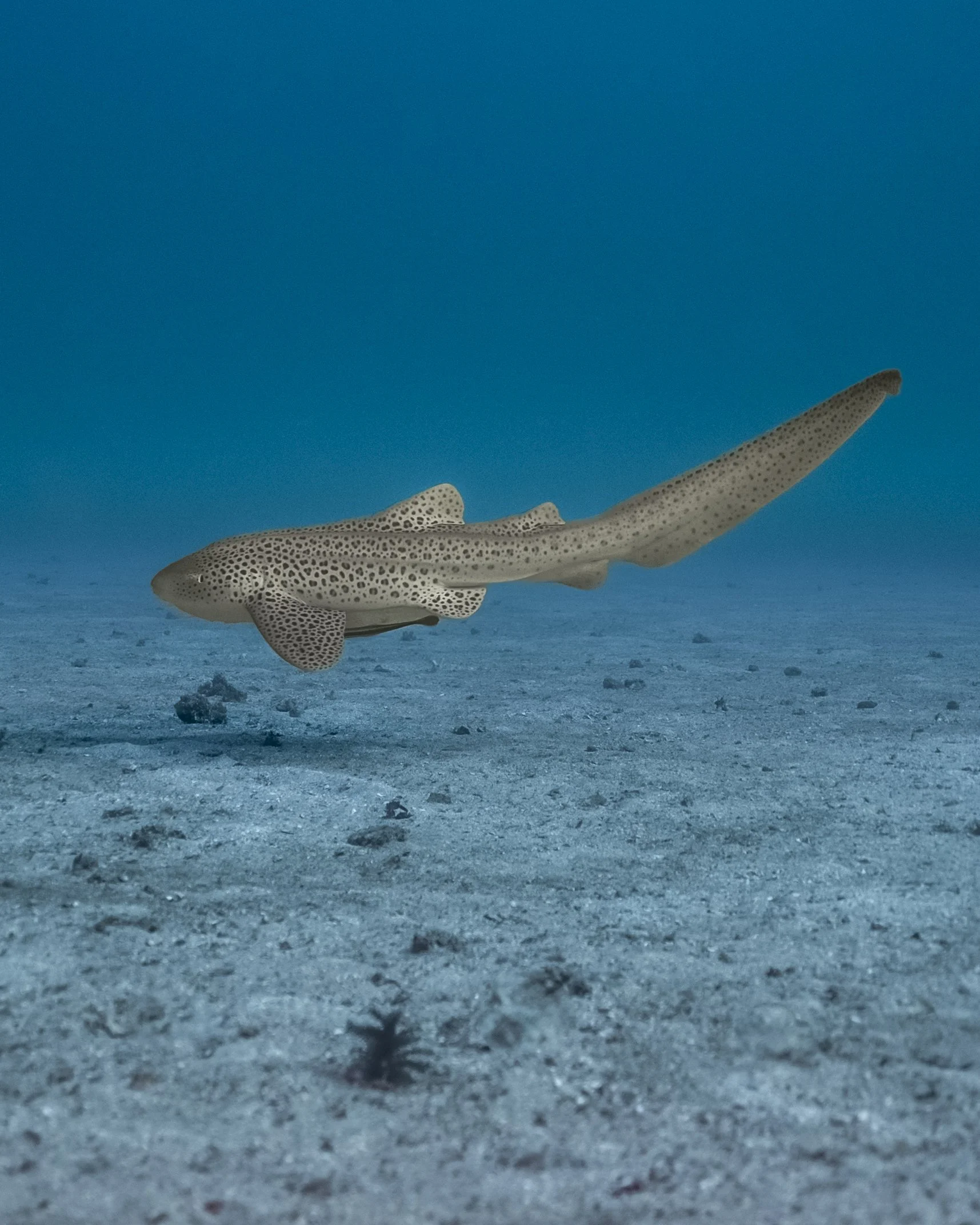
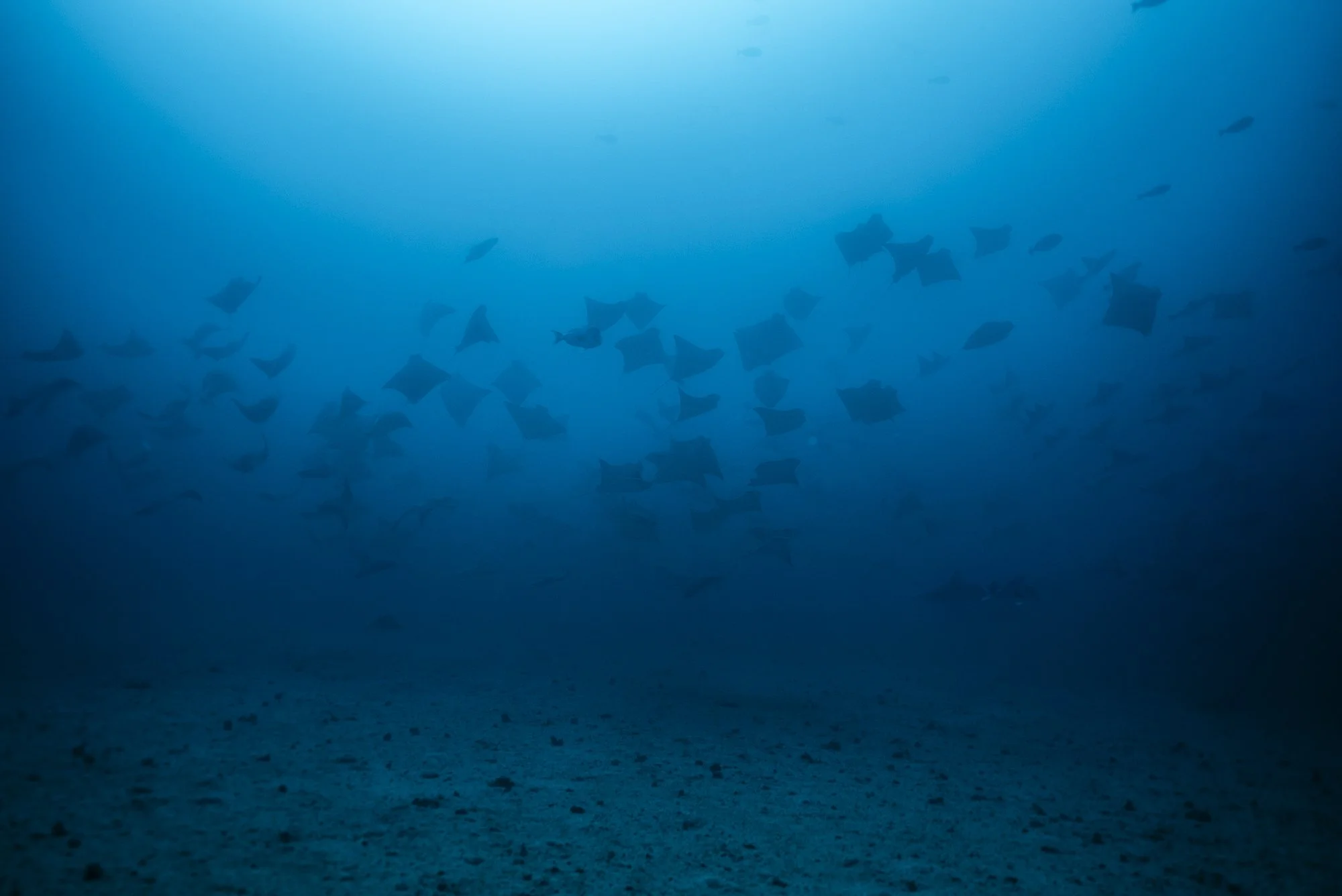
Another shark that zigzagged around the seafloor was a female leopard shark. In contrast to bull sharks, leopard sharks pose no harm to humans whatsoever, and are more approachable, though this particular shark didn’t seem terribly interested in being on camera. As I was getting caught up by both of these sharks, James yelled through his rebreather to look up. Tilting my head up, I could not believe my eyes - it was an absolutely humungous fever of cownose rays. At first, the rays were too far away to get a close enough shot, and vanished into the blue. But then they reappeared - almost like they were playing a game of hide and seek - and slowly came closer. Seeing their shadows lit up by the sun made us feel like we were flying in amongst majestic birds. The final cherry on top was hearing the distant echoes of humpback whales loudly reverberate underwater, though, none were spotted underwater during the dive, despite my best efforts to keep my head on a swivel.
After nearly 30 minutes at 33m, we then slowly ascended back up towards the main reef, where we ended up seeing so many of the fish species made famous by the movie Finding Nemo - ocellaris clownfish (Nemo), regal blue tangs (Dory), yellow longnose butterfly fish (Tad), yellow tangs (Bubbles), and moorish idols (Gill). After all, Straddie is right in the middle of the East Australian Current (where the bulk of the movie is set), so it wasn’t really a surprise to see these species of fish immortalised by Pixar. We also saw a small overhang home to more turtles and a wobbegong shark, before doing another pass of the slopes and then slowly heading to the surface.
Our second dive was at the neighbouring site, Shark Alley, which is home to a healthy population of grey nurse sharks peacefully swimming about, with some of them being heavily pregnant. For this dive, I left the camera behind and instead chose to enjoy the dive fully without distraction. There really is nothing like spending 45 minutes slowly hovering in the middle of a school of sharks, knowing that they are accepting your presence and are not at all what the media makes them out to be. This was where the rebreather’s advantages manifested themselves again.
Not only did my silence enable me to get closer to the sharks, but having a partial pressure of 1.3 the whole time meant that my decompression obligations were significantly reduced while also enabling long bottom times. During the surface interval between these dives, I felt really bad for the scuba divers who had to cut their dives short due to a finite air supply, and change tanks on the surface whilst in a damp wetsuit. One of my friends described this exact same situation for his Galapagos expeditions, and why, in his opinion, sites like these are best experienced on a rebreather.
On the following weekend, I had a chance to do another dive on a much quieter boat consisting of only tech divers. This time, we decided to do one long 90 minute dive early in the morning, albeit with slightly differing decompression schedules due to a mix of rebreather and twinset divers. Nonetheless, the dive went swimmingly, and while we saw a lot of the usual suspects at Flat Rock again (ie. bull sharks, cownose rays, green sea turtles), we also saw a few animals that we weren’t expecting to encounter, including the biggest loggerhead turtle I’ve ever seen, a wily octopus nimbly dancing across the reef, bulky Queensland groupers, a large eagle ray checking us out from afar, giant clams wedged in crevices, and emperor angelfish, bannerfish, lionfish and trevallies all floating around in the current. There were several times during the dive where I cackled with excitement into the loop of my rebreather.
I had the chance to return to Flat Rock several times, although my final dive there was one where the conditions had deteriorated unexpectedly, and left me feeling tired and a little grumpy. Against my better judgement, I chose to skip the last day of diving to save my energy, not knowing I was about to make one of the biggest mistakes of my entire diving career. According to my friends who did go on the boat, they spotted a humpback whale mother and calf, a manta ray and even a minke whale - all three of which are rarely seen underwater at this time of the year. Boy, do I regret sitting out that dive! Although I was told the visibility was questionable and the whales only briefly appeared underwater, that did nothing to prevent me from cursing my lungs out towards my foolishness and POMO (pain of missing out). Once I finally got all the obscenities out of my system, I then realised that this actually gave me the perfect excuse to come back and dive again, though I’m currently undecided as to whether to come in the winter again or check out the warmer months for a change.
All in all, this trip was definitely one of the most auspicious, satisfying diving adventures I’ve undertaken since I first learned to dive, and one that all but confirmed my suspicions that Straddie is one of the closest equivalents, if not the closest equivalent, of Galapagos-level diving within Australia. Although no hammerheads and whale sharks were sighted during this particular trip, the fact that they have been previously sighted gives me an excuse to come back, and I most certainly will. You know it’s a really special place when there is simply too much to see underwater as far as big animals go, and it is impossible not to feel like you are part of a big blue ocean thriving with life when you are submerged beneath the waters of Stradbroke Island.